The construction industry faces increasing pressure to reduce its carbon footprint as climate change concerns shape building regulations and client expectations. For architects and specifiers, material selection has never carried more weight.
Embodied carbon has become a central consideration in sustainable building design, yet the conversation often oversimplifies complex realities. Headlines frequently position certain building materials as inherently "green" whilst casting others as environmental villains. The truth is more nuanced. A proper assessment of environmental impact requires looking beyond initial manufacturing emissions to consider durability, maintenance requirements, replacement cycles, and end-of-life scenarios.
Brick, timber, and various cladding systems each have distinct carbon profiles. Understanding these differences helps architects make informed decisions that balance aesthetic intent, technical performance, and environmental responsibility.
At UK Brick, we've spent years studying how our products perform in rigorous life cycle assessments. Our partnership with Randers Tegl, one of Northern Europe's leading brick producers with over 100 years of experience, gives us access to detailed environmental product declarations and manufacturing data. This evidence-based approach reveals that bricks' exceptional longevity and low maintenance requirements create a compelling sustainability case when viewed over decades of service.
Embodied carbon refers to the total greenhouse gas emissions generated during the extraction, manufacturing, transportation, and construction of building materials. Unlike operational carbon, which comes from a building's energy use during occupation, embodied carbon represents the "upfront" environmental cost of the structure itself before it’s used.
As buildings become more energy efficient, operational emissions decrease, making embodied carbon an increasingly significant portion of a building's total environmental impact. For architects working on net-zero carbon projects or seeking environmental certification, material choices directly affect whether sustainability targets can be met. Additionally, clients are asking tougher questions about environmental performance, and specifiers need credible data to support their recommendations.
Timber has gained considerable attention as a sustainable building material. The initial embodied carbon of timber construction is typically lower than that of brick, making it attractive when focusing solely on upfront emissions.
However, a complete comparison requires examining the whole picture. Timber's environmental benefits depend heavily on several factors that aren't always considered. The sourcing matters enormously - timber from unsustainable forestry operations or transported long distances can carry a surprisingly high carbon footprint. Treatment processes to achieve necessary fire ratings and durability add both embodied carbon and chemicals to the equation.
The durability question presents perhaps the most significant consideration. Whilst brick structures routinely last 150+ years with minimal intervention, timber construction requires more careful detailing and maintenance to achieve comparable longevity. Timber exposed to weather needs protection and maintenance, adding complexity and potentially compromising the initial carbon advantage.
Mass timber building techniques like cross-laminated timber show promise for larger structures, but the manufacturing process involves adhesives and processing that increase embodied carbon compared to simple sawn timber. These engineered timber products also tend to be specified for structural applications rather than façades, placing them in a different category from facing bricks.
For residential buildings in the UK, timber frame construction clad with brick offers an interesting hybrid approach. The structural frame benefits from timber's lower initial carbon, whilst the brick façade provides durability, weather protection, and high thermal mass. This combination acknowledges the strengths of both materials rather than positioning them as competitors.
Clay bricks manufactured using renewable energy sources - such as our GREENER range - narrow the embodied carbon gap with timber considerably whilst maintaining brick's durability advantages. When assessed over a 100-year timespan, the annual carbon cost of brick becomes remarkably competitive with timber alternatives.

Lightweight cladding systems, including aluminium panels, composite materials, and various rendered systems, often appear as lower-carbon alternatives to traditional masonry. The reality is more complicated and depends heavily on which system is being specified and how longevity is factored into the assessment.
Aluminium production is extremely energy-intensive, making aluminium panels one of the highest embodied carbon materials in construction. Whilst recycling significantly reduces this impact, new aluminium cladding carries substantial carbon emissions.
Fibre cement and composite panel systems generally show lower initial embodied carbon than either brick or aluminium. However, these materials typically have expected service lives of 30-40 years at best. A building intended to last more than a century (which most are!) will require multiple cladding replacements, each bringing new embodied carbon, construction waste, disruption, and cost. When this replacement cycle is factored into the total carbon footprint, the initial advantage often disappears.
Rendered systems on insulated substrates can achieve very low carbon footprints, but again, the challenge lies in durability, weathering, and maintenance. Render requires periodic repair and reapplication, especially on exposed elevations. Each maintenance intervention brings both embodied carbon from new materials and disruption to occupants.
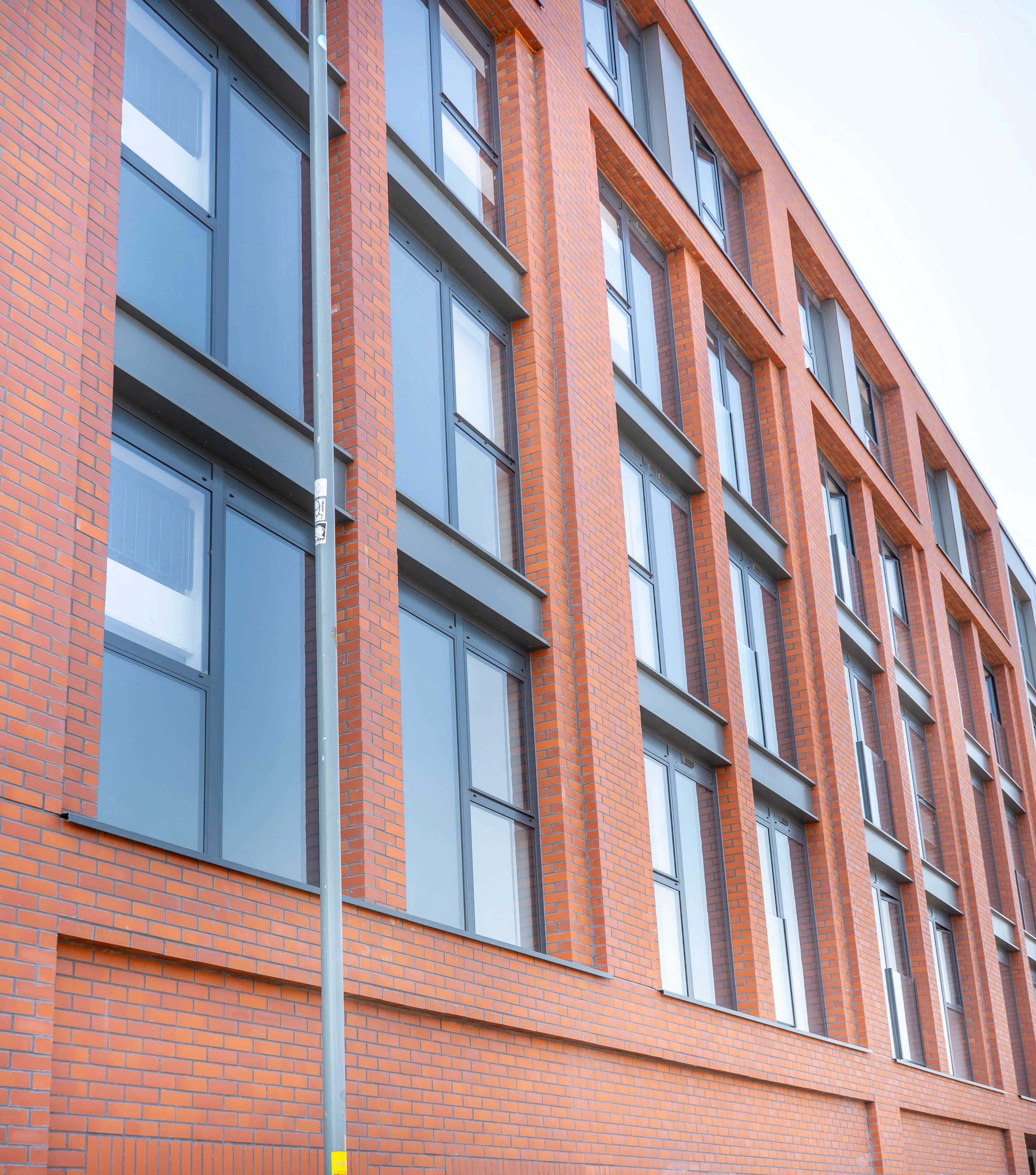
Brick's advantage in these comparisons comes from its exceptional durability. A well-constructed brick façade requires virtually no maintenance for decades. No repainting, no seal replacement, no weatherproofing treatments. This absence of ongoing intervention means no recurring embodied carbon from maintenance materials or construction site operations needed to apply them. The high thermal mass of brick also contributes to energy efficiency during the operational phase. Whilst this doesn't technically count as embodied carbon, it affects the building's overall environmental performance. Brick's ability to moderate temperature swings reduces operational emissions from heating and cooling - a benefit that lightweight cladding systems cannot match.

The choice of materials for any building project involves balancing multiple factors - aesthetics, performance, cost, and increasingly, environmental impact.
Brick performs well when assessed honestly across its full lifecycle. Yes, the firing process requires energy use and produces carbon emissions. However, these upfront costs are spread across 150+ years of service with minimal maintenance and no replacement. Add renewable energy manufacturing through initiatives like our GREENER range, and brick becomes a genuinely low carbon option over the building's life.
Environmental product declarations (EPDs) provide the transparent data architects and specifiers need to make informed comparisons. At UK Brick, we supply products from Randers Tegl with comprehensive EPD documentation, allowing accurate inclusion in whole-building carbon assessments. This transparency lets specifiers compare materials on equal terms rather than relying on general assumptions.
The built environment faces a long transition toward carbon neutrality. During this transition, choosing durable, natural materials that won't need frequent replacement represents a practical approach to reducing total carbon impact. Brick manufactured with renewable energy sources and designed to last for generations fits this approach.
For more information, or to arrange a free, no obligation quote, contact us on 07985 295 996 / 0121 663 1940, email us at info@uk-brick.com, or use our online contact form.
The GREENER range achieves approximately 50% reduction in embodied carbon compared to conventionally manufactured brick. This is accomplished through exclusive use of renewable energy sources - wind turbine electricity and biogas instead of fossil fuels - during the manufacturing process.
Yes, brick can contribute positively to green building certifications when properly specified and documented. Our products come with Environmental Product Declarations (EPDs) that provide the verified data required for these assessments.
Brick façades regularly achieve 150+ years of service with minimal maintenance. This is evidenced by centuries-old brick buildings still in use throughout the UK. By comparison, most lightweight cladding systems have expected lifespans of 30-40 years, aluminium systems 40-50 years, and rendered systems require significant maintenance every 10-15 years.