
Choosing the right brick comes down to five decisions: project type, brick format, surface finish, colour palette, and durability requirements for the site. This guide walks through each in order, helping you narrow down the right option for your build, extension, or specification.
Brick specification should begin as early as possible in the design process, ideally before final material schedules and detailing are fixed. Early planning makes it easier to align brick choice with the building style, local context, colour palette, and performance requirements. Start Your Planning Early Being prepared and organised for a new build is always an advantage, however, this is particularly true when deciding on what type of brick to use. During this stage, you will consider the architectural design as well as the geographic location. Observing neighbouring vernacular builds are a good way to gauge what brick is typically used in the area. It is also during this phase that factors such as interior colour palette choices should be considered This includes tiling and floor choices as brick colour and finish must compliment interior elements.
The right brick shape and finish will depend on whether the project is aiming for a traditional, contemporary, or mixed architectural style. Format, texture, and colour variation all influence the final appearance of the façade, so these decisions should be made together rather than in isolation.
Selection Of Brick Shape and Finish Bricks have stood the test of time and have been used for centuries due to their durability and countless advantages over alternative building materials. Brick selection can be difficult, as the number and variety of options make it seem like a daunting task. The shape and finish of a brick can have a strong impact on the final aesthetic and therefore all options must be explored. At UK Brick we supply waterstruck bricks in a catalogue that is widely varied in colour pallet and shape.
Options to consider include:
The mortar colour can have a dramatic effect on the final appearance of the wall, influencing contrast, depth, and how strongly the individual bricks stand out across the façade.
Brick bond affects both appearance and construction logic, so it should be considered alongside the brick format rather than as a final afterthought. Standard and linear bricks can behave very differently visually depending on the chosen bond pattern.
Once the brick choice has been made, the final step is deciding on how best to lay them. The structure and layout can have a major impact on the final aesthetic of the build.
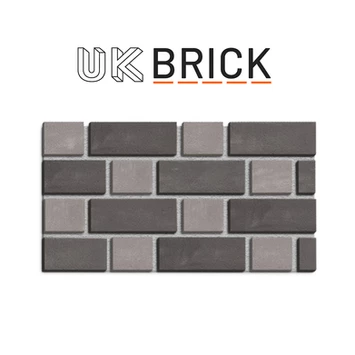
Whilst there are several bricklaying configurations, the three basic arrangements include the English bond, Flemish bond and the Stretcher bond.
- The English Bond
The English Bond consists of alternating courses of headers and stretchers,
in which headers are centralised with the mid-point of the stretcher on the course below and above. This provides a strong bond when the wall is constructed.

- Flemish bond
Flemish bond is a popular bricklaying pattern that’s created by alternately laying headers and stretchers in a single course of brick. After the first course has been laid, the next course is laid so that a header lies in the middle of the original stretcher course.
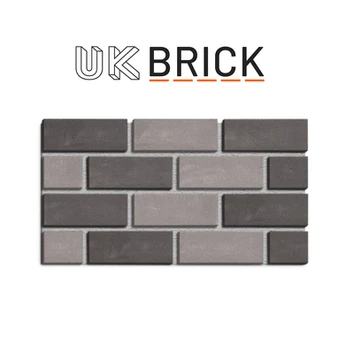
- Stretcher bond It’s easy and simple to construct and produces minimal brick wastage due to the vertical joints being staggered each time by a half brick. Another advantage of this brick bond pattern is that the bricks don’t have to be cut to size to be used.
A contemporary new build may benefit from linear bricks or cleaner waterstruck finishes, while a period extension often calls for standard UK brick sizes and more natural colour variation. Commercial façades may require long-format units for scale and visual rhythm, while smaller residential projects often focus more on colour matching and how the new brickwork sits alongside existing materials.
Choosing the right brick does not have to be complicated once the key decisions are made in the right order. Start with the building type and design intent, then narrow the choice by format, finish, colour, and bond pattern so the final brick specification supports both performance and appearance.
If you are comparing options for a current project, our team can help you review suitable ranges and provide guidance on the most appropriate brick styles for the design.
For a house extension, the best brick is usually one that balances visual compatibility with the existing property and the desired finish of the new work. In many cases, standard-format waterstruck bricks with natural tonal variation are a good starting point.
Waterstruck bricks are made using water-moistened moulds, which create a softer, more characterful surface with natural variation. Wirecut bricks are typically more uniform and linear in appearance, which can suit cleaner or more standardised façade designs.
Matching new bricks to existing brickwork usually involves comparing colour tone, size, texture, and the level of variation across the wall. Viewing physical samples next to the existing masonry is often the best way to assess compatibility.
Stretcher bond is one of the most common brick bonds in the UK, particularly for modern cavity wall construction. English bond and Flemish bond are also widely recognised, especially where a more traditional appearance is required.
The number of bricks needed per square metre depends on the size of the brick and the mortar joint. For standard UK brick formats, the figure is commonly estimated at around 60 bricks per square metre, but this should always be checked against the actual product dimensions and bond pattern.