
Hit and miss brickwork is a bonding technique in which bricks are laid with deliberate gaps between them, creating a pattern of solid and open sections. The gaps allow light, air and sight lines through the wall while maintaining a structural brick face. It is used for garden walls, screen walls, boundary treatments and architectural feature panels.
There is an honesty and a story etched into each of our bricks, and we love every time our clay makes an architect smile. It’s easy to get lured into the surface texture and subtle nuances of an extraordinary material though. But don’t be fooled. Our bricks perfectly balance style and substance. There is a flexibility and versatility that lies beneath the surface; we work with architects to overcome complex design challenges, and to realise a unique balance of science and art. Let’s take ‘hit and miss’ bonding as an example.
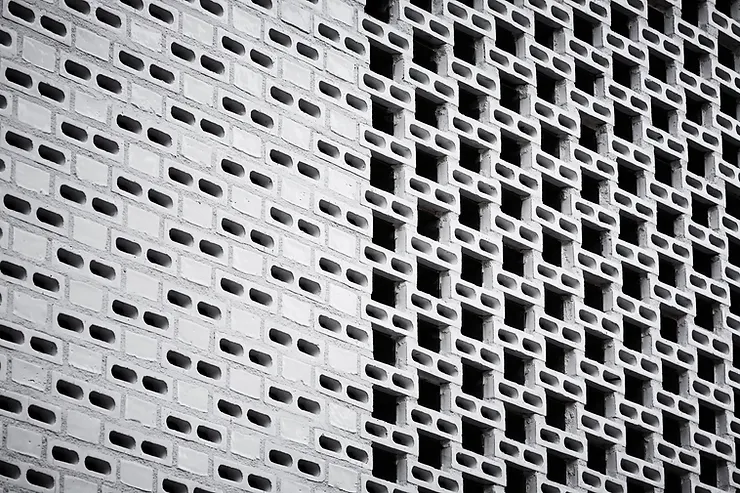
Quality, texture and colour. These are huge deciding factors when choosing the right facing bricks for any build. But with innovative design, comes unique challenges, and there are often structural elements to consider whilst choosing the right materials.
Hit and miss brickwork offers an almost infinite possibility in design. The popularity of such bonding is fast increasing, and the visual appeal is enticing. Yet such variance and possibility brings unique challenges for every build. Don’t compromise, though. Our team is on hand to help structural engineers and architects achieve the necessary structural integrity, without compromising the artistic vision.
The pattern itself can vary considerably — from regular alternating gaps to more asymmetric arrangements that introduce rhythm and movement across the wall face. The open sections are typically one brick wide, but the ratio of solid to open is a design decision that also directly affects the structural calculation. This is where material choice and engineering become inseparable.
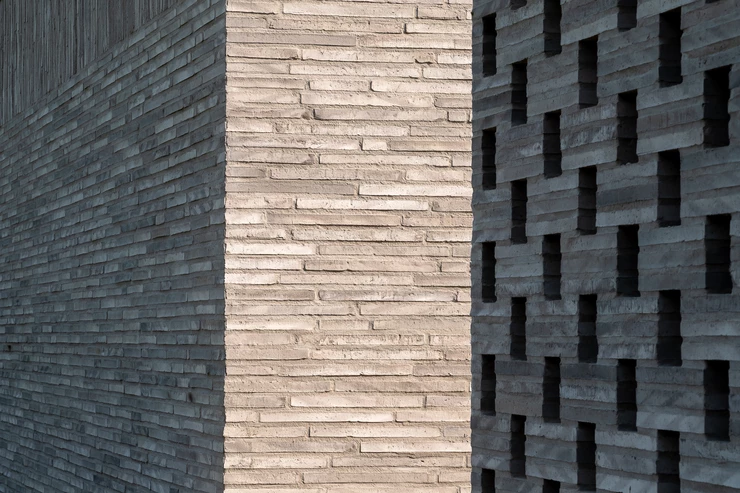
Let's start with the basics. For hit and miss wall structures, frogged or cored bricks should be avoided. All of our brick collections are solid, and the brick specification is suitable for such unconventional bonding design. But getting the material right is just the start.
UK Brick's waterstruck collections are solid throughout — no frogs, no cores — making them inherently suited to hit and miss bonding without any modification to the specification.
By nature, hit and miss brickwork requires careful consideration; it is less structurally sound than a stretcher bonded wall, and the material must work in unison with the design to ensure safe and successful construction. These walls should be treated as non-load-bearing walling systems, and to ensure they have sufficient structural strength, the panels should be supported on at least three sides. Our solutions help minimise structural weakness, and deliver workable results without compromise.
Key structural considerations at a glance:
If the design calculations fall outside of the allowable limitations, don’t panic. Varying gap sizes can create dynamic effects and patterns, and the hit and miss panel can be split into a number of smaller areas. Wall thickness, spanning distance and using a stronger mortar mix offers the necessary structural stability, and sometimes, incorporating structural beams provides the additional strength.
As every design is unique, there is not one solution. But with a solid brick as our foundation, there are always options, and we can find the right solution for you.
Common gap patterns include regular alternating (one brick on, one gap), double-stretcher with single gap, and fully asymmetric arrangements designed around a specific façade rhythm. The visual result changes significantly depending on the gap-to-solid ratio — tighter ratios feel more enclosed and private; wider ratios feel open, light and screen-like.
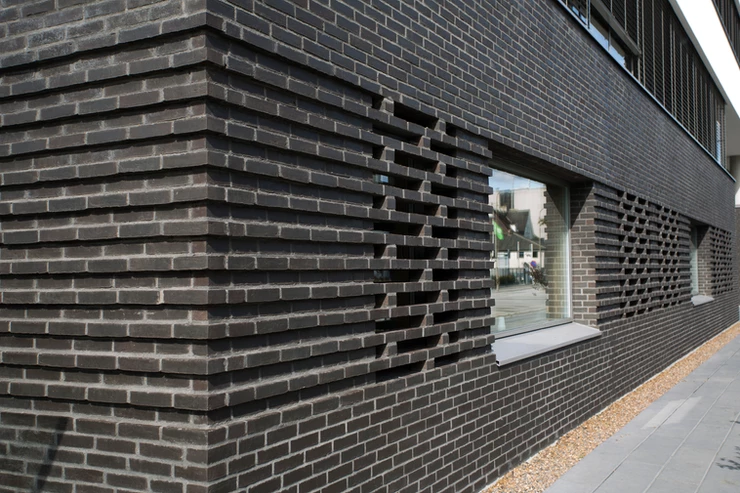
We love working with architects. Their uncompromising commitment to quality is why our bricks exist. Our bricks have the visual and specification quality to fulfil any artistic vision. And our team is on hand to support you through structural challenges, ensuring that the visual integrity remains just as strong as the structure.
UK Brick is here to bridge the gap between art and science. Because when ingenuity in design meets an extraordinary material, an everlasting print is made on our earth.
Don’t compromise, build with UK Bricks.
Browse solid waterstruck bricks suited to hit and miss →Speak to the team about structural requirements →
Solid bricks with no frogs or cores. Frogged or cored bricks should be avoided for hit and miss wall structures. UK Brick's waterstruck collections are solid throughout, making them suitable for this bonding technique without any modification to the specification.
Hit and miss brickwork is less structurally sound than a stretcher bonded wall and should be treated as a non-load-bearing walling system. To ensure sufficient structural strength, panels should be supported on at least three sides. Wall thickness, spanning distance and mortar mix all affect the structural allowances.
Hit and miss brickwork is used for garden walls, screen walls, boundary treatments and architectural feature panels. It allows light, air and sight lines through the wall while maintaining a brick face — making it a popular choice for both residential and commercial architectural projects.
If design calculations fall outside allowable limitations, the panel can be split into smaller areas. For larger spans or more demanding structural conditions, incorporating structural brick beams provides the additional strength required. UK Brick's team works with architects and structural engineers to find the right solution for each project.
A stronger mortar mix than standard can provide additional structural stability for hit and miss walls. The exact specification depends on wall thickness, spanning distance and the gap-to-solid ratio of the pattern. UK Brick's team can advise on the right approach for your specific project.
Yes. Varying gap sizes can create dynamic effects and patterns across the wall face. Common arrangements include regular alternating gaps, double-stretcher with single gap, and fully asymmetric patterns designed around a specific façade rhythm. The gap-to-solid ratio significantly affects both the visual result and the structural calculation.