
Brick beams and brick-faced lintels are prefabricated structural elements used to span openings in brick façades while maintaining continuous brickwork across the opening head. A structural brick beam uses a precast concrete core with factory-bonded brick slips. A brick-faced lintel uses a lighter structural chassis — typically steel — clad with matching brickwork. Both preserve the brick aesthetic; the choice depends on span, load, and visual intent.
Large openings are a defining feature of contemporary brick architecture — floor-to-ceiling glazing, deep reveals, sharp shadow gaps, and long horizontal lines that make façades feel calm and intentional. But in masonry construction, openings that push beyond “standard” proportions quickly become a balancing act: structural performance, programme certainty, and one non-negotiable for design-led work — aesthetic continuity across the opening head.
This is exactly where prefabricated brick beams and lintels come into their own. They allow architects, contractors, and self-builders to create bold openings while keeping the brick language uninterrupted — especially when the façade uses waterstruck bricks or linear/long format units, where texture and joint alignment are impossible to “hide.”

In masonry terms, openings that exceed roughly 1.5 metres typically demand more specialist structural thinking than a basic “off-the-shelf” approach. The reason is simple: the wider the opening, the more load the surrounding brickwork must redirect around it — and the more the head detail becomes an engineered piece of the façade rather than a background component.
UK Brick’s approach frames the challenge in three linked parts:
On site, “beam” and “lintel” can get used loosely. For specification, it helps to define them the way UK Brick does:
A structural brick beam is a load-bearing element engineered to span openings while presenting a true brick finish on the visible faces. UK Brick describes a structural core (typically precast concrete) carrying the design loads, with factory-bonded brick slips recreating the chosen bond pattern, joint profile and soffit depth — produced under controlled conditions to tight tolerances for repeatability and less on-site cutting.
A brick-faced lintel is often based on a lighter structural chassis and is commonly selected where structural demands are lower or where a lintel detail is preferred — while still keeping the brick aesthetic continuous.
The key takeaway for B2B decision-making: this isn’t “beam vs lintel” as a theory exercise — it’s choosing the right prefabricated system to achieve the opening you want, with the brick finish and joint discipline your façade requires.
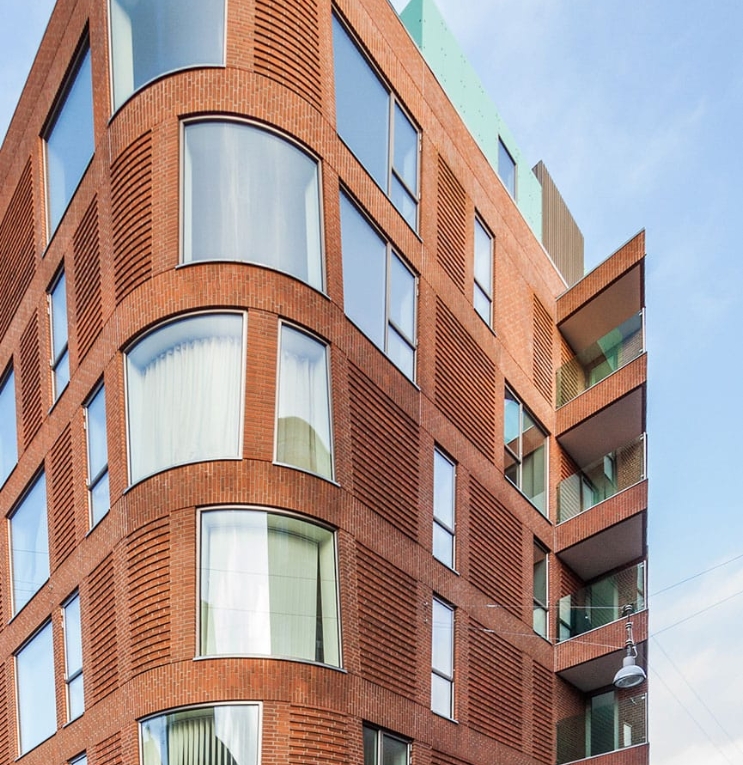
UK Brick sets out three practical system types commonly specified for design-led brick openings:
This is typically the most versatile approach for large residential and commercial openings: a structural steel member with a facing that keeps the brick language consistent across the head. UK Brick notes these can span up to around 3 metres or more, with a typical lead time of about 4–6 weeks.
Where it works best
For projects where the priority is that the opening reads as brickwork first (not a lintel detail), UK Brick positions reinforced brick beams as the choice for bespoke authenticity. Their system comparison gives a typical span of up to ~2.5 metres, with lead time around 6–10 weeks, and highlights the higher level of visual integration because it reads as solid brickwork.
Where it works best
A contemporary hybrid: structural lintel faced with matching brick slips. UK Brick describes these as working particularly well on contemporary specifications, spanning up to roughly 2 metres, with lead times around 3–4 weeks.
Where it works best
Linear and long format bricks are unforgiving in the best way. They sharpen shadow lines, reduce vertical joint frequency, and create strong horizontal emphasis — but they also magnify every misalignment across an opening head.
UK Brick’s Ultima Linear Range is produced in a distinctive 468 × 108 × 38 mm format, described as delivering an elongated, linear aesthetic with refined shadow lines (and it’s waterstruck). UK Brick also explicitly positions these bricks for façades and interior feature walls, with the usual caveat that colour variation and surface expression will change with firing and weathering — so real-world reference and sampling matter.
What this means for beams/lintels
If you’re specifying waterstruck bricks, the façade isn’t just colour — it’s surface structure. UK Brick explains that wet clay is pressed into individual moulds moistened with water so the clay releases cleanly; the water release leaves a smooth, natural texture, and each brick carries its own “water imprint.”
They also call out the design reason waterstruck bricks get specified: the surface structure created by water gives façades personality and depth while keeping lines clean and refined — supported by Scandinavian clay with fine particles and consistency for repeatable results.
So when an opening head introduces a different texture, a different joint logic, or a visible “patch,” it doesn’t just look slightly off — it breaks the story the brickwork is telling. That’s why prefabricated brick solutions are often treated as façade components, not just structural hardware.
UK Brick’s structural beam guidance is very clear: you get the best outcomes when the system is specified like a façade package — with brick, bond, joints, soffits and interfaces agreed up front, then manufactured under controlled conditions.
Provide elevations, opening schedules and outline load information. UK Brick notes they review spans and bearings, confirm brick source, bond pattern, joint thickness, soffit depth, corner/return geometry and movement-joint positions; shop drawings are issued for approval, and trial panels can be prepared where required.
That list is the “UK Brick tone” in practice: architecture-first detail control, backed by off-site repeatability.
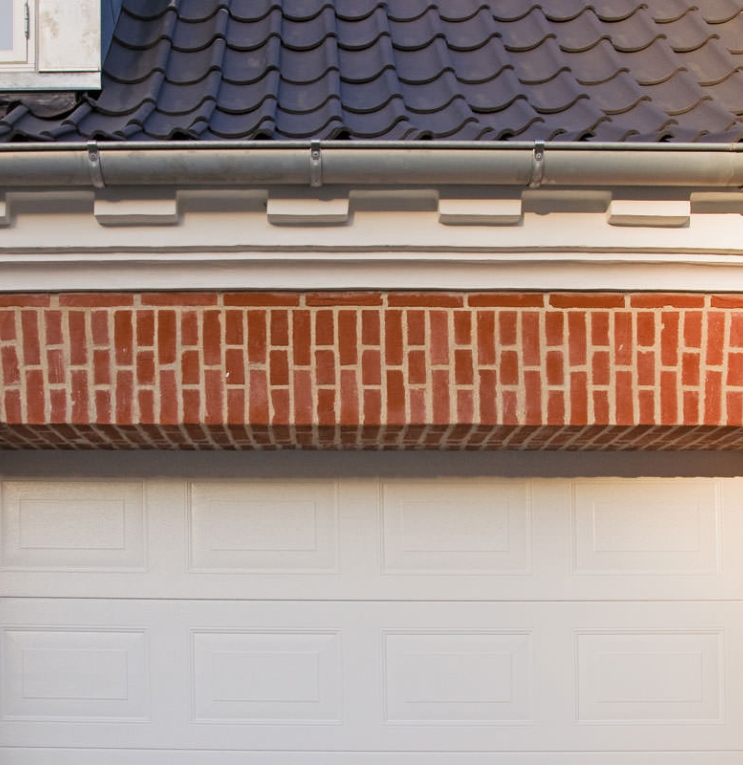
Behind these systems is specialist engineering + production. Randers Tegl’s Carlsberg Bjælker™ is described as an integrated engineering and design division that delivers co-created solutions for brick structures, and they also describe a specialist unit producing pre-stressed lintels and beams made of brick. You don’t need to name the supply chain in your blog — but it’s helpful context for B2B readers: these aren’t improvised site assemblies; they’re engineered products with design + manufacturing coordination built in.
If your façade is design-led — waterstruck texture, controlled joints, long format linear coursing — the head detail over an opening is part of the architecture, whether you intended it or not.
Prefabricated brick beams and brick-faced lintels let you:
For architects: specify the system like you’d specify the façade.
For contractors: buildability improves when details are agreed early and delivered as an engineered package.
For self-builders: ask for the drawings, confirm the brick match approach, and don’t skip the “boring” bearing + DPC basics.
When it’s done well, the opening doesn’t look like a solved problem — it looks like it was always meant to be there.